Blog
-
Curvilinear Elements
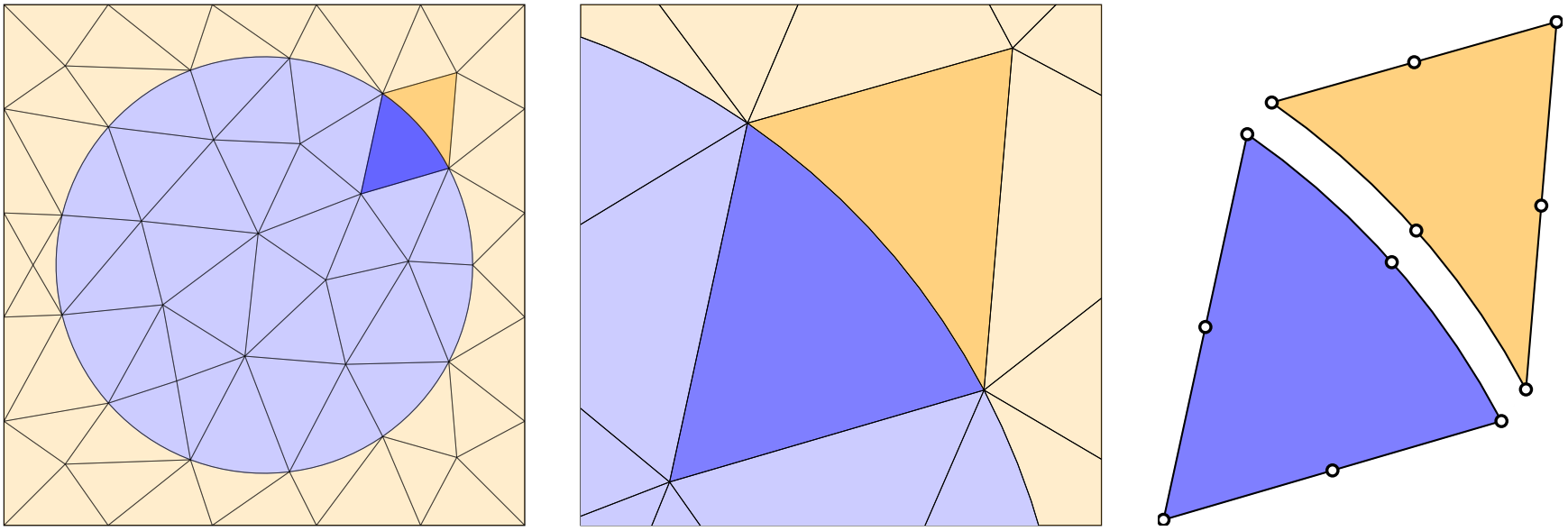
This blog post introduces the curvilinear element option for creating curved mesh elements. We assess under which conditions using a curvilinear degree is applicable and quantify the resulting inrease in accuracy.
all, plasmonics, Advanced Finite Element Methods, Light Scattering Computation
-
Extraction efficiency of a single-photon emitter into a single-mode fiber
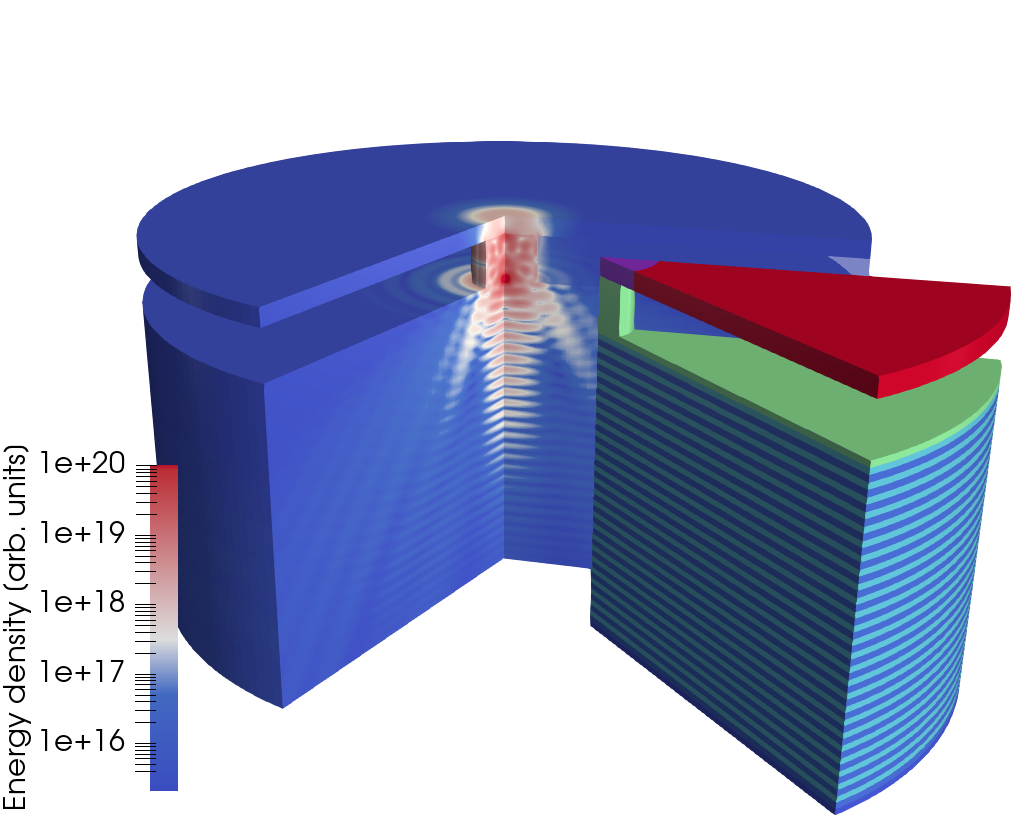
This blog post is based on the publication P.-I. Schneider, et al. Numerical optimization of the extraction efficiency of a quantum-dot based single-photon emitter into a single-mode fiber. Opt. Express 26, 8479 (2018). The publication introduces a finite-element method for the accurate and efficient simulation of strongly localized light sources, such as quantum dots, embedded in dielectric micro-optical structures. The method is applied in order to optimize the photon extraction efficiency of a single-photon emitter and to study the robustness of the extraction efficiency with respect to fabrication errors and defects.
Light Sources, quantum optics, Advanced Finite Element Methods
-
The Finite-Element Method for Nano-Optics Simulations
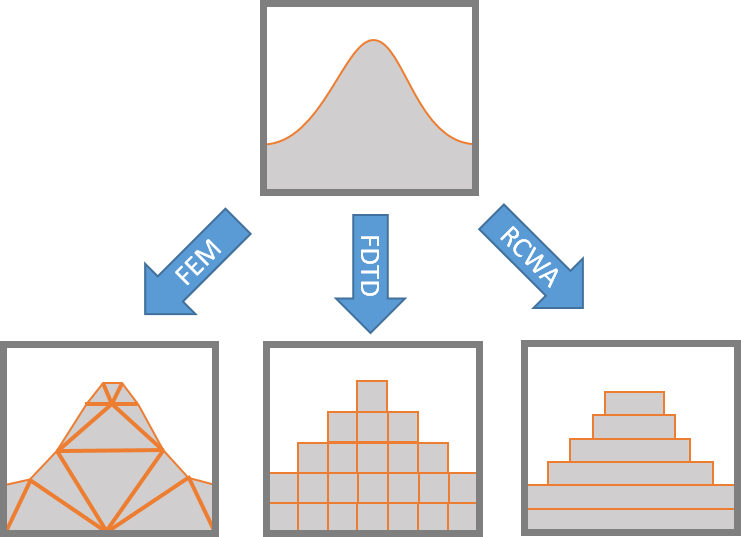
JCMsuite employs the finite element method (FEM) in order to simulate the electrodynamic, mechanic and thermodynamic behavior of nano-optical systems. In this blog we want to motivate and describe the usage FEM for determining the electrodynamic system properties. We will compare the method to other common approaches like the rigorous coupled-wave analysis (RCWA) and the finite difference time domain (FDTD). Finally, we will present some benchmarks to show that FEM can be orders of magnitude faster and more precise than alternative methods.
resonance mode computation, software benchmarks, Advanced Finite Element Methods