JCMoptimizer
Machine-learning tools for expensive simulations and experiments.
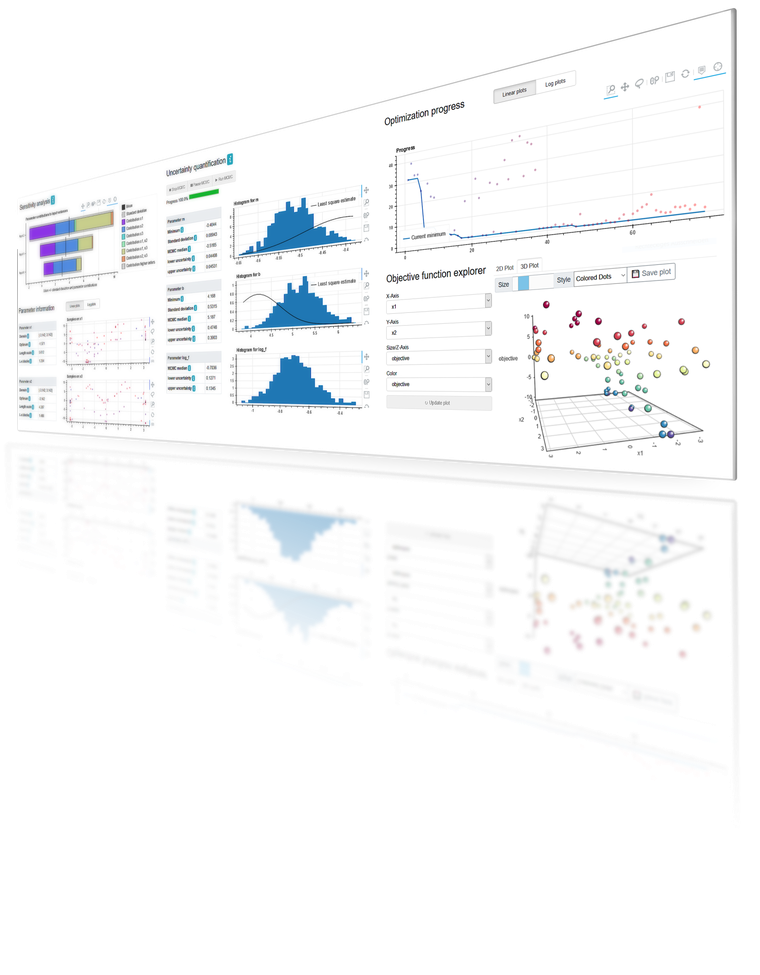
JCMoptimizer helps analyze, calibrate, and optimize black-box systems whose evaluations are costly, from FEM simulations of optical devices to laboratory experiments. It combines efficient sampling strategies, probabilistic surrogate models, and browser-based study dashboards.
Black-box studies
Learn from costly evaluations.
Many engineering and research workflows depend on black-box systems: a numerical simulation, a physical experiment, or a fabrication process that is too expensive for brute-force parameter sweeps. JCMoptimizer structures these studies and uses every observation to improve the next decision.

Optimization
Find better designs with fewer trials.
Bayesian optimization builds a probabilistic model of the design space and uses it to propose informative evaluations. This makes global optimization practical when each simulation or experiment has a high cost.
Model calibration
Reconstruct parameters and uncertainties.
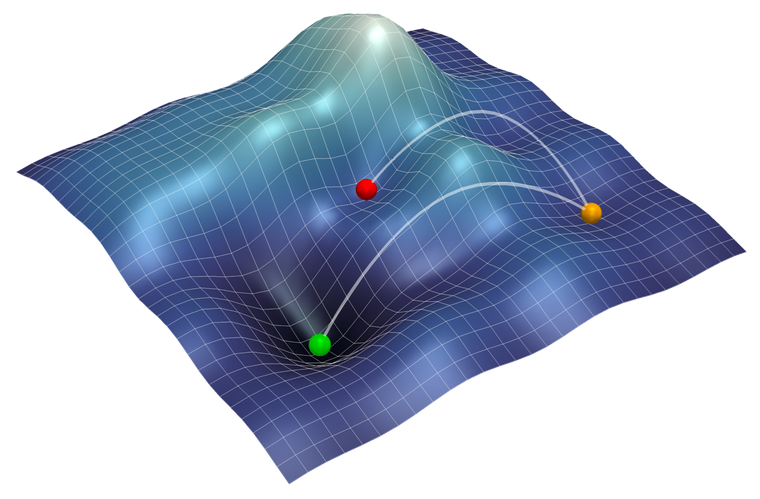
For digital twins and inverse measurements, unknown model parameters can be reconstructed from observations. JCMoptimizer supports efficient parameter retrieval and uncertainty analysis, including workflows based on Bayesian least squares and Markov chain Monte Carlo sampling.

Advanced studies
Go beyond single-objective optimization.
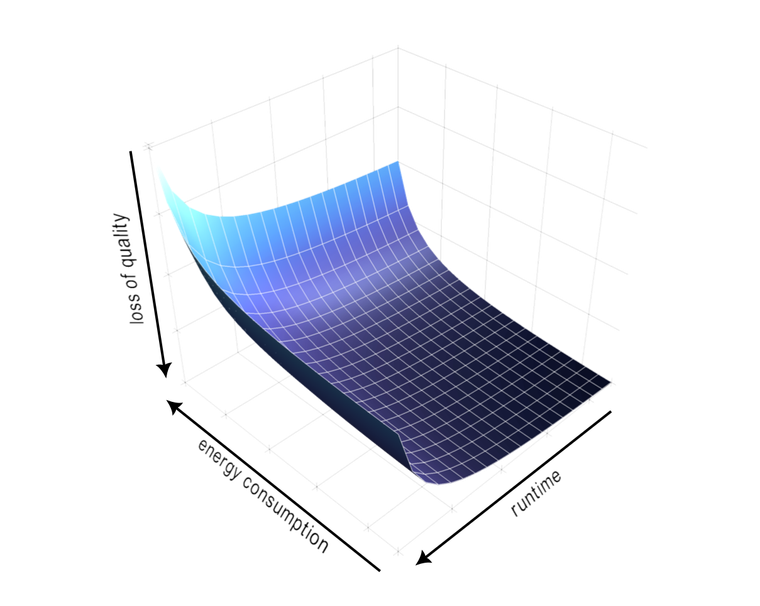
The same surrogate-model foundation supports multi-objective optimization, active learning of global models, and sensitivity analysis. These workflows help explore trade-offs, build fast approximations, and identify which parameters drive system behavior.
Interfaces
Run studies from scripts and monitor them in the browser.
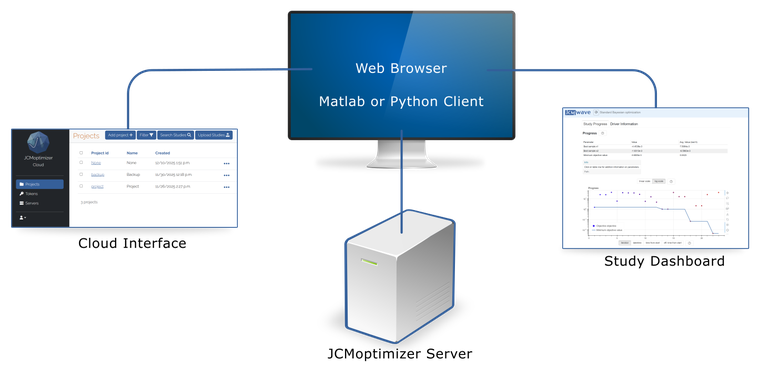
JCMoptimizer can be controlled from Python and MATLAB clients, while the cloud interface and study dashboard keep projects, server resources, progress, and results accessible from a web browser.